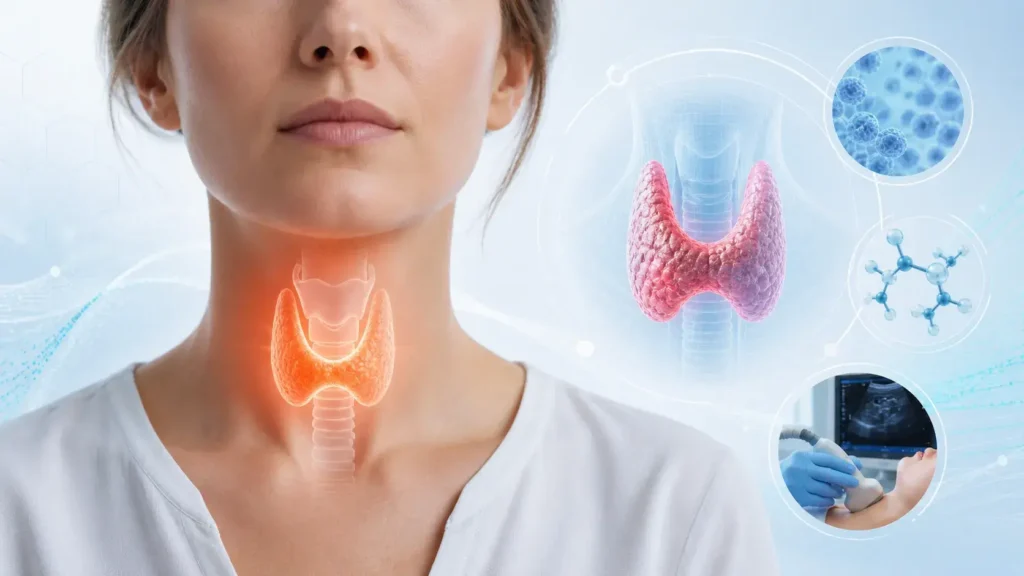
Thyroid disorders can range from a small, harmless goiter (enlarged gland) that needs no treatment, to life-threatening cancer. The most common thyroid problems involve abnormal production of thyroid hormones.
Too much thyroid hormone results in a condition known as hyperthyroidism. Also known as overactive thyroid, hyperthyroidism can accelerate your body’s metabolism, causing unintentional weight loss and a rapid or irregular heartbeat. Problems caused by an overactive thyroid will continue unless they are treated. In most cases, hyperthyroidism can be cured — but if left untreated, it can cause serious problems with the heart, bones, muscles, menstrual cycle, and fertility.
Hypothyroidism is another serious condition caused by thyroid disorders. With hypothyroidism, the thyroid gland is incapable of producing enough thyroid hormone to keep the body running normally. A common cause is autoimmune disease, such as Hashimoto’s Thyroiditis. Symptoms include fatigue, weakness, and constipation. If left untreated, hypothyroidism can lead to many complications including heart problems, and in some severe cases, death.
Thyroid disorders are treatable — but only if properly diagnosed.
A specialized evaluation is your first step toward feeling like yourself again.

At Endocrine Specialists of Georgia, we understand that thyroid disorders affect far more than just your metabolism — they impact your energy, your mood, your weight, and your overall quality of life. Led by Dr. Francisco Puentes, Board Certified in Endocrinology, Diabetes & Metabolism, our approach focuses on identifying the specific thyroid condition and designing a personalized treatment plan for each patient.
At Endocrine Specialists of Georgia, we understand that thyroid disorders affect far more than just your metabolism — they impact your energy, your mood, your weight, and your overall quality of life. Led by Dr. Francisco Puentes, Board Certified in Endocrinology, Diabetes & Metabolism, our approach focuses on identifying the specific thyroid condition and designing a personalized treatment plan for each patient.
A precise diagnosis is the foundation of effective treatment. During your consultation, we perform a comprehensive evaluation that may include:
Most thyroid disorders are highly treatable. With the right diagnosis and a personalized plan, you can restore your hormonal balance and get back to feeling your best.
Hypothyroidism means your thyroid is underactive — it does not produce enough hormone to keep your body functioning normally, leading to fatigue, weight gain, and constipation. Hyperthyroidism means your thyroid is overactive — it produces too much hormone, causing weight loss, rapid heartbeat, and anxiety. Both conditions require proper diagnosis and treatment by a specialist.
Hashimoto’s Thyroiditis is an autoimmune condition and the most common cause of hypothyroidism. While it is a chronic condition, it is very manageable with the right treatment. Left untreated, it can lead to serious complications including heart problems. With proper thyroid hormone replacement therapy and ongoing monitoring, most patients live full, healthy lives.
Yes. Both hyperthyroidism and hypothyroidism can disrupt the menstrual cycle and affect fertility. Hyperthyroidism, if left untreated, can cause serious problems with the menstrual cycle and reproductive health. Hypothyroidism is also known to interfere with ovulation and fertility. Proper thyroid management is essential for women who are pregnant or planning to become pregnant.
Don’t leave your health to chance. Contact our Atlanta office for a professional consultation.
