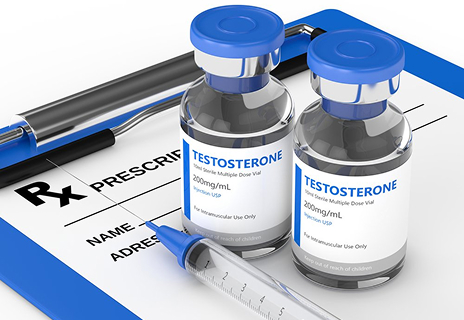
If you have symptoms of low testosterone that affect your day-to-day life, in addition to low blood levels of testosterone, then testosterone replacement therapy may be right for you. A medical decision of this nature should be discussed with your doctor and a specialist who will help you determine whether this treatment is appropriate for your case.
As with many treatment options, there are both risks and rewards that should be fully discussed with your physician prior to treatment. When properly prescribed, most studies show that testosterone therapy produces improvements in erectile dysfunction, sex drive, muscle strength, and bone density. These effects vary from one patient to the next; some men also report improved mental acuity, better focus, and an enhanced mood.
It is important to remember that testosterone replacement therapy is not for every male patient. Symptoms of low testosterone on their own — without blood tests to corroborate low testosterone levels — are generally not enough to prescribe this treatment option.
A proper medical evaluation is the only way to know if testosterone therapy is right for you

Every man is different, and it is impossible to predict specific benefits for each individual. That being said, many male patients report noticeable improvements in their day-to-day lives.
The most frequently reported benefits include:
The majority of patients report improvements in most — if not all — of these categories. However, the degree of improvement varies widely from patient to patient.
At Endocrine Specialists of Georgia, led by Dr. Francisco Puentes, Board Certified in Endocrinology, Diabetes & Metabolism, we take a rigorous, scientific approach to testosterone therapy:
Listen to Dr. Puentes’ Interview: “Testosterone Talk with Dr. Francisco Puentes MD, FACE” — available on our YouTube channel.
The only reliable way to diagnose low testosterone is through blood tests ordered by your physician. Symptoms alone — such as fatigue, low libido, or difficulty concentrating — are not enough to prescribe treatment. A complete evaluation includes total and free testosterone, along with other hormonal markers, to confirm the diagnosis and identify the underlying cause.
The most common side effect is skin irritation at the application site of gels or creams. More serious risks include elevated hematocrit levels hnd the potential to worsen conditions such as benign prostatic hypertrophy, sleep apnea, prostate cancer, or blood clots. That is why medical supervision and periodic monitoring are essential.
Not necessarily. The duration depends on the underlying cause of the testosterone deficiency, your response to treatment, and how your symptoms evolve over time. Dr. Puentes evaluates each case individually and adjusts the therapy as needed — including the possibility of reducing the dose or discontinuing treatment if appropriate.
Don’t leave your health to chance. Contact our Atlanta office for a professional consultation.
